Designing the experience layer behind Cuemath's parent-teacher meetings
I worked at Cuemath in the CEO's office and I helped build the parent-teacher meeting (PTM) system that lifted customer renewals 38%
COMPANY
Cuemath
(Global K-12 EdTech)
ROLE
Program Manager, Customer Experience with product adjacent work
DURATION
Oct 2022 – Jun 2023
TEAM
Customer Experience Team · Product Manager · Engineering · Teacher Training Team
I OWNED
User Research · Insights · Content Strategy · Evaluation Rubrics · Teacher Training · Experience Design · UX Writing · App Flow Design
The Problem
Renewal requests were dwindling. Our hypothesis was that parental trust was eroding before renewal decisions as there weren't any structural touchpoints between parents (customer) and tutors.
Parents rarely met with tutors and had little visibility into class progress. Online tutors lacked the confidence and language to hold difficult conversations about progress
The Solution
A parent-teacher meeting app (PTM) connecting parents and tutors, with a structured quarterly conversation where the student's progress was discussed in an orchestrated way.
The design challenge was: how do you build a shared conversational infrastructure between tutors and parents, at scale, across cultures?"
The Outcome
Trust and clearer communication between parents and tutors, facilitated by Cuemath Customer Experience Team, led to a 38% increase in customer retention across regions.
What is Cuemath?
Cuemath is a global after-school math tutoring platform for K–12 students. Each child gets a dedicated tutor for live, 1:1 online classes, with a curriculum aligned to US Common Core and international standards. The platform serves families across India, the US, the UK, Australia, New Zealand, and the Middle East.
My Role
Building the Experience for Customers
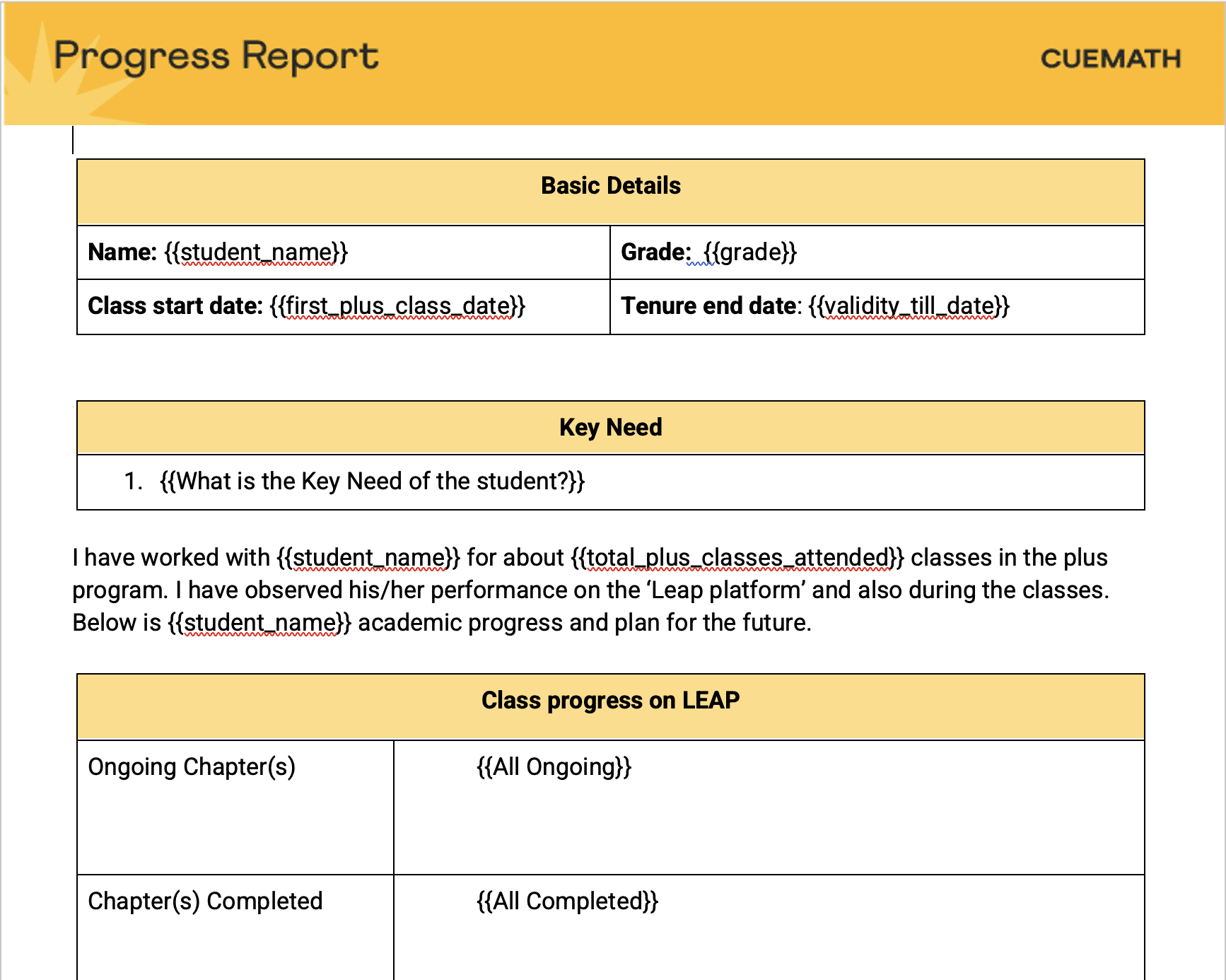
My work sat at the intersection of product and learning design: I led discovery research, translated user insights into app content and flows, designed the quality framework, and partnered with product and engineering to ship it. As part of the CEO's office, I worked with engineers, a product manager, and the tutor excellence team to build a parent-teacher meeting (PTM) product in a 6-month timeframe. Tutors had to coordinate across time zones with parents, and often didn't know what to say, leading to friction on both ends. The PTM app was decided as a quarterly exercise to walk parents through what their child had learned. The content team agreed to provide quarterly progress reports for each student.
User Research: Listening to 40+ tutor FGDs
Before designing anything, I needed to understand what was actually breaking down between tutors and parents. I listened in on and reviewed notes from 40+ Tutor Focus Group Discussions across the US, UK, New Zealand, Australia, and MENA. Two clear needs emerged: tutors needed to build trust with parents and to convey progress without making them feel attacked or disappointed.
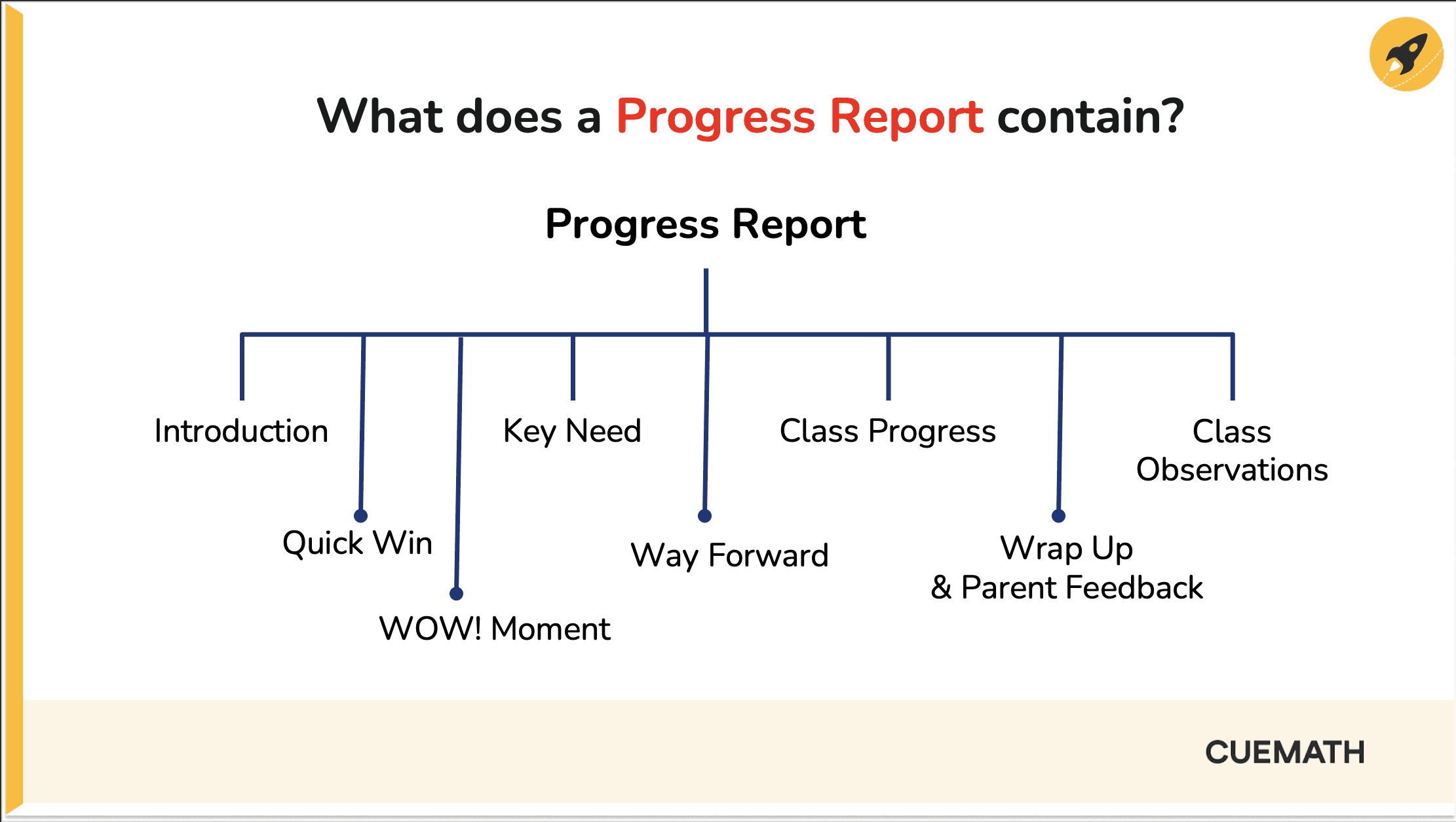
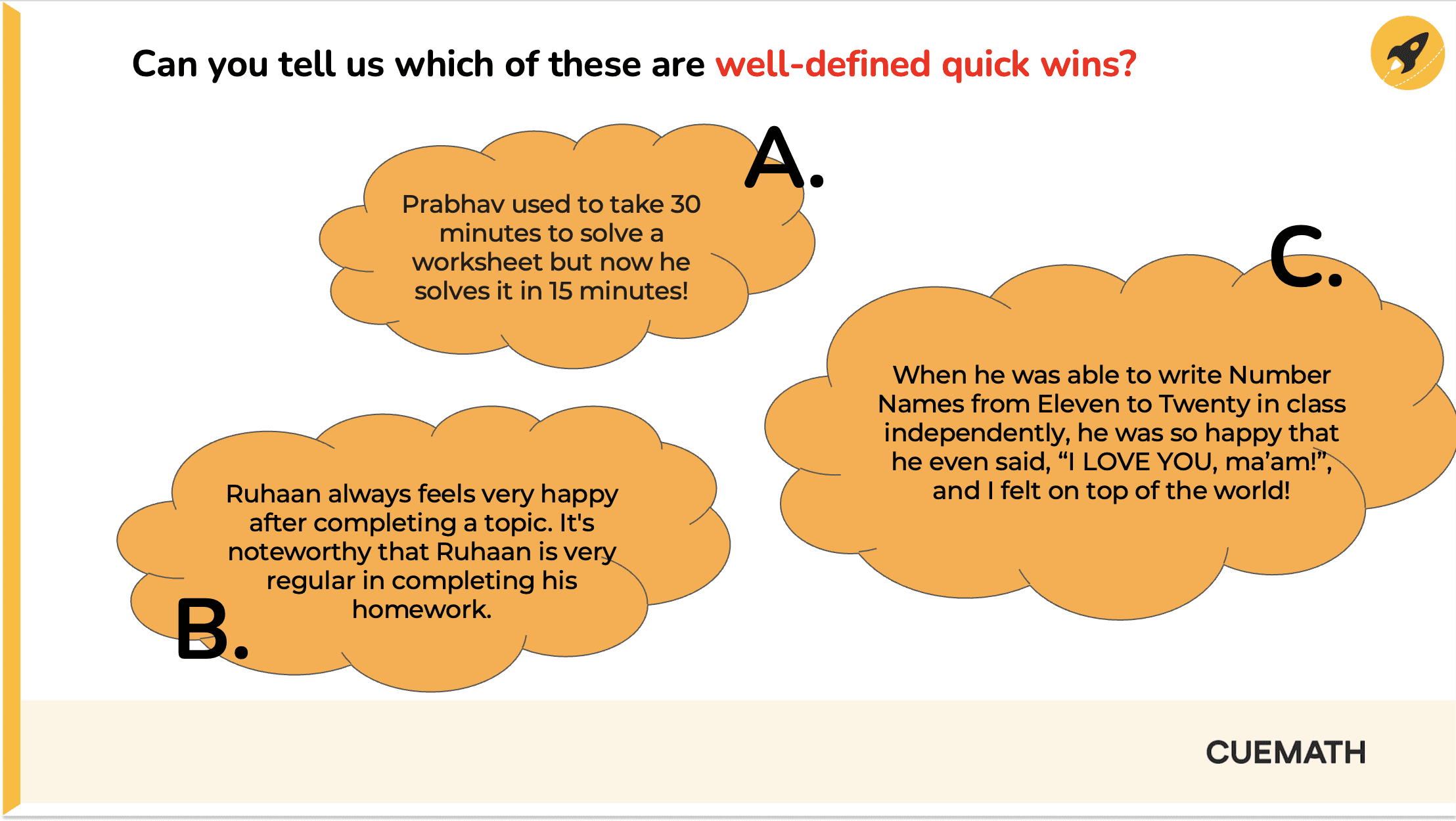
Key Needs of the Student emerged as the personalization differentiater for the students and it was agreed that hypercustomization of curriculum to meet the students needs would be our focus for the PTM meeting.
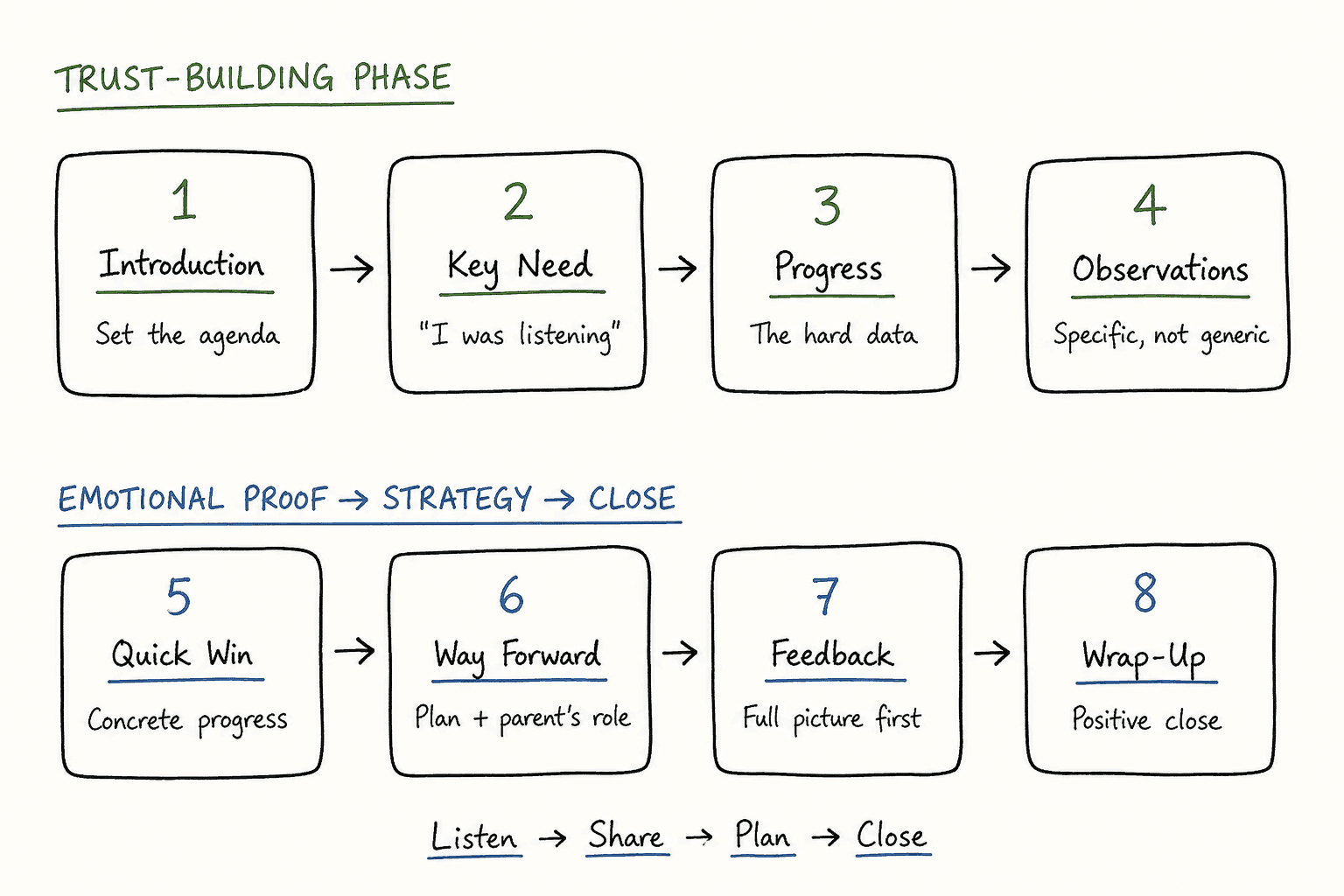
I mapped these into a broad user journey for the meeting between parents and tutor as seen here.
User Insights: What made parents upset?
In further analysis of tutor FGDs with over 400 tutors, a clear pattern emerged: parents asked many uncomfortable questions that tutors felt ill-equipped to answer.
I used thematic analysis across regional cohorts to identify patterns that were culturally consistent vs. region-specific. The 4 parent concern categories (Fear of Math, Conceptual Clarity, Extra Practice, Exam Prep) emerged as cross-regional constant
These 4 parent concerns can be clicked upon and viewed here.
Click each concern to explore
↩
Interaction Design/ UX Writing: Translating Parent Concerns into In-App Conversation Flows
From the user insights, I built out the product's content. Five parent needs were identified, and for each one I wrote probing questions, the desired vs. vague need statements they should listen for, and an explanation script connecting the need to what Cuemath delivers. The engineering and product team shipped these directly into the tutor app, so every PTM had a structured way to translate a parent's worry into something the tutor could act on.
Click a need to see the script
↩
- Needs to build understanding of fractions, decimals, ratio and proportion from the current or previous grade.
- If no specific topics emerge, the real need is something else that has caused the lack of conceptual clarity, keep probing.
- “Build conceptual clarity.”
- “Build strong fundamentals.”
- Generic need statements with no topic anchor.
Evaluation Rubric
To grade tutor PTM calls consistently, I built an evaluation rubric of 25 parameters across 4 stages (opening, listening, presenting progress, planning). Each parameter had three levels of expectation for grading the tutors. A team of 6 quality reviewers used it to score recorded calls and feed coaching back to tutors. A sample portion of this rubric is added here to click through.
The 25×4 rubric (portion of which is seen here) is a behaviorally-anchored assessment framework where each parameter has three observable performance levels so coaches can give specific, evidence-based feedback rather than subjective impressions.
Scores fed back into coaching cycles: low scores on 'critical' parameters triggered immediate 1:1 coaching; 'non-critical' ones were addressed in group sessions.
Click through the rubric stages
↩
Training content and walkthrough production
Training Content and Delivery
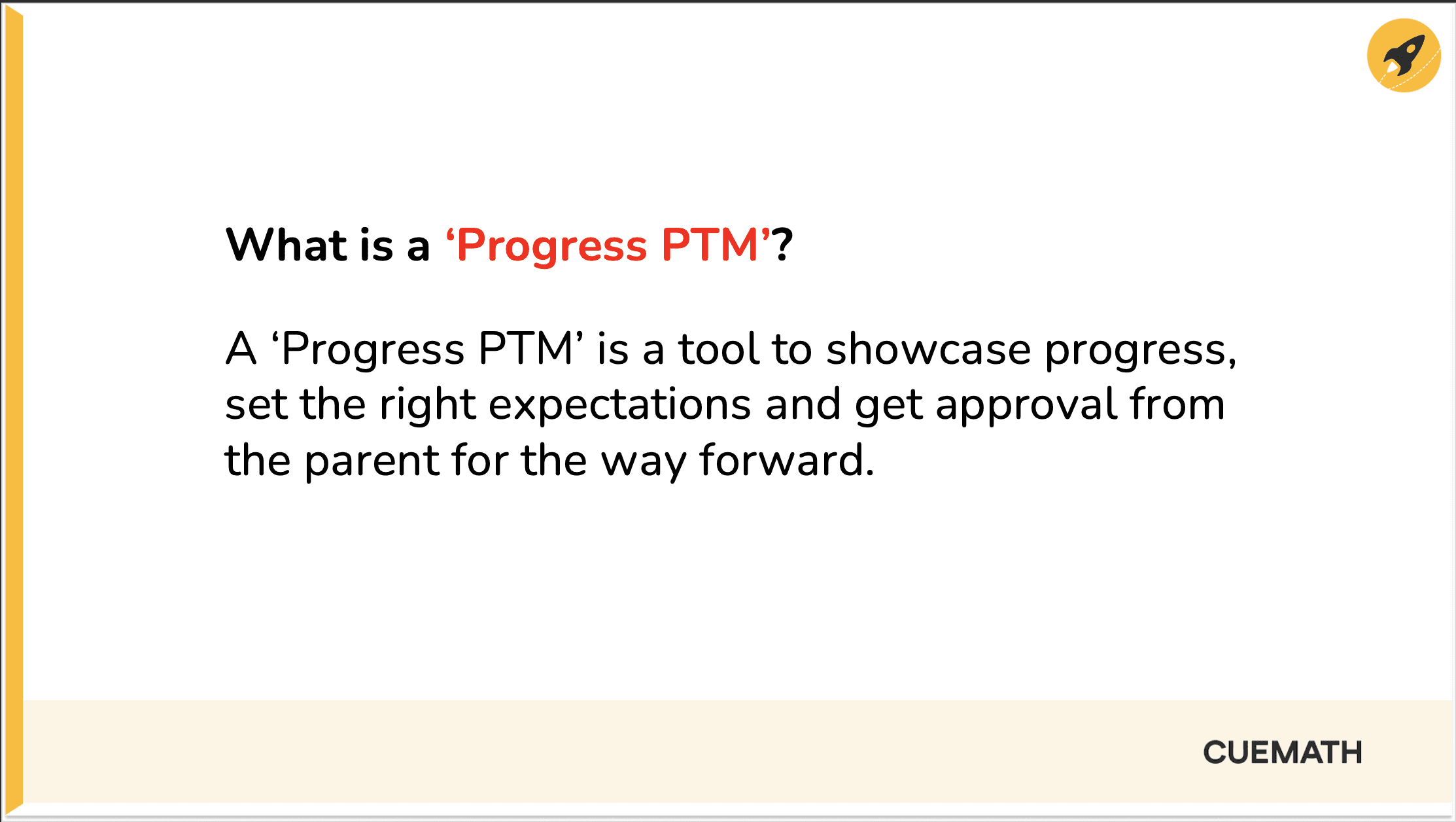
Once the PTM flow and rubric were set, I wrote and produced the training content that took 40,000 tutors through the new system: scripted module videos, a slide deck for live training sessions, and a walkthrough video for the upgraded PTM app. The training stack was built so a regional lead could run a session anywhere with no extra prep.
Click here for the prototype!
↩
Video Production and App Training
The PTM app was built around one idea: reduce the tutor's decision load before the meeting starts. The home screen shows one task at a time so tutors don't have to hunt for what's relevant. The task card leads with the student's name and grade ("Reyansh | Grade 2") to orient the tutor for the session.
The app has three states: a preparation view where the tutor reviews progress data and picks the most relevant probing questions, an in-meeting view that surfaces the 8-step PTM flow with conversation scripts, and a post-meeting summary where the tutor logs the parent's key concern and the plan going forward. This keeps the tool useful across the full PTM, not just as a pre-call checklist, and creates a lightweight record of parent concerns that could, with future instrumentation, feed back into coaching and content decisions.
Metric
38%
CUSTOMER RETENTION
40K
TUTORS TRAINED
25×4
PARAMETER RUBRIC
5
Learning Outcomes
After a 6-week beta with 400 tutors, the structured PTM flow and probing-question framework rolled out to all 40,000 Cuemath teachers. Customer retention rose 38% across regions as parents reported clearer conversations and stronger trust in their tutors.
Better PTM conversations → parents understand their child's specific gaps → increased buy-in for targeted practice at home → improved learner progress between sessions. The 38% retention lift is the business signal; the learning signal would be: do students in high-PTM-quality cohorts show faster mastery progression?
What I Learned
I learned to listen carefully and understand what the user actually needed rather than what they were asking. The 'why' behind a tutor's reluctance to schedule a parent meeting wasn't the logistics everyone presumed, it was psychological. Finding the parent concerns and addressing them helped solve for that. I also learned how to work in product sprints, with each iteration leading to tweaks that were understood, discussed, and prioritized. A fantastic team and great collaboration made this project a real joy to work on.